

Devlog #4 – Football Legends, backend statistics: a closer look at the codebase
Currently, in this final stretch of 2025, I’m working on the definitive version of the Football Legends app interface. It’s a slow process, full of artistic and usability doubts. And I have to admit… I miss the programming months! Those calm days, with clear ideas and long sessions writing PHP files (mostly) in Notepad++. So relaxing! (Yes, it sounds pretty geeky, but hey… I’m making a video game. What did you expect, dear reader?)
Thinking about that, I decided to take another look at the project folders related to the backend, and I hadn’t fully realized how much code has accumulated. I’m sure it’s not the most elegant code in the world, but it does what I need it to do, and I’m genuinely happy with the result.
While browsing through some files, a question popped into my mind: how many lines of code are there in total? I don’t remember ever seeing this kind of information in other projects, and it felt like a fun challenge to see if I could count and categorize everything. (Yes, I’m a huge stats nerd… seriously 😆)
Of course, the number of lines doesn’t define the quality of a project. You can have gigantic monsters with millions of lines and still be a complete mess — or tiny, compact wonders that are super efficient.
Even so… curiosity won the battle. I looked for tools and ended up discovering this piece of software that counts and classifies code by language: Sloc, Cloc and Code (scc) — https://github.com/boyter/scc.
And here are the results:
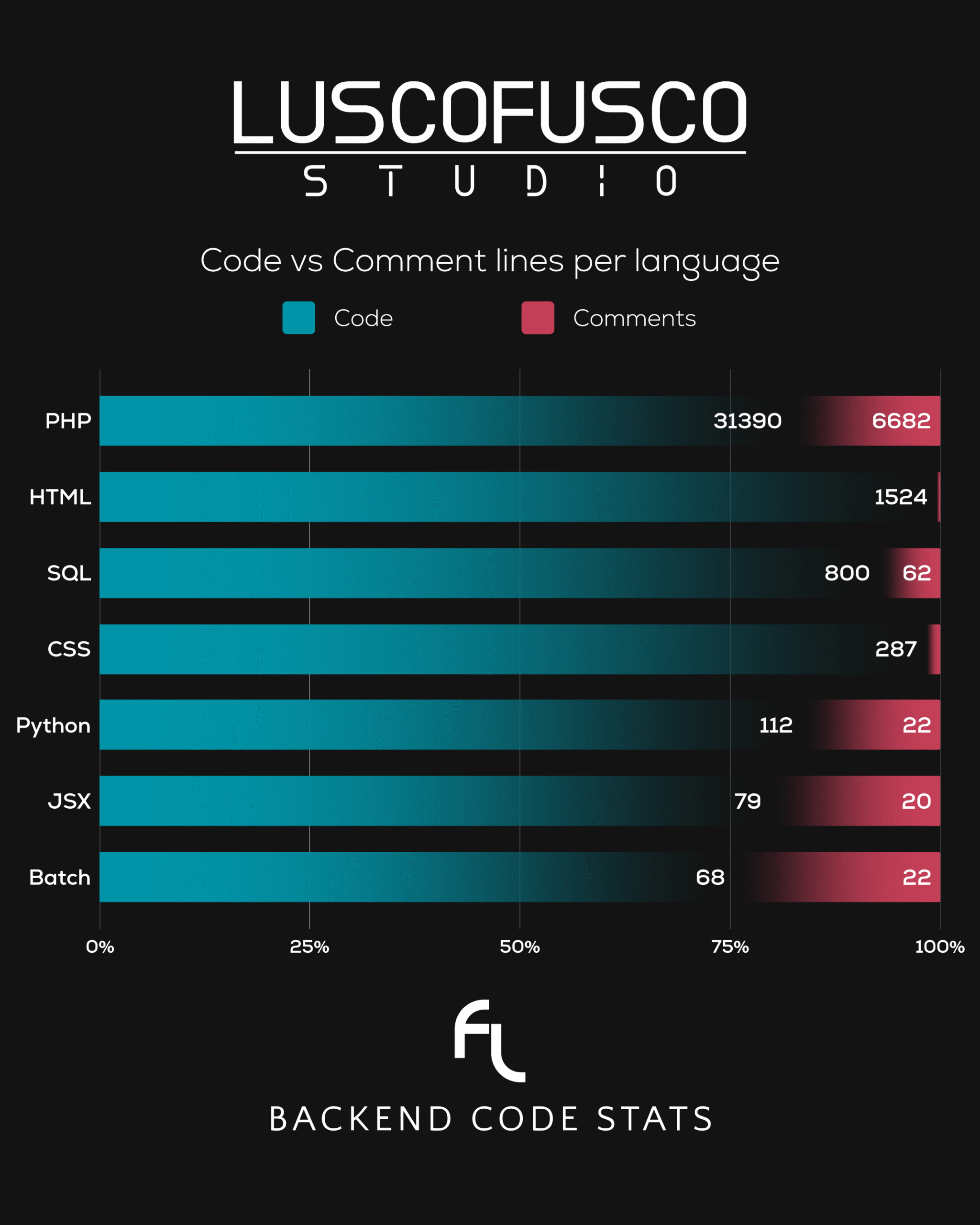
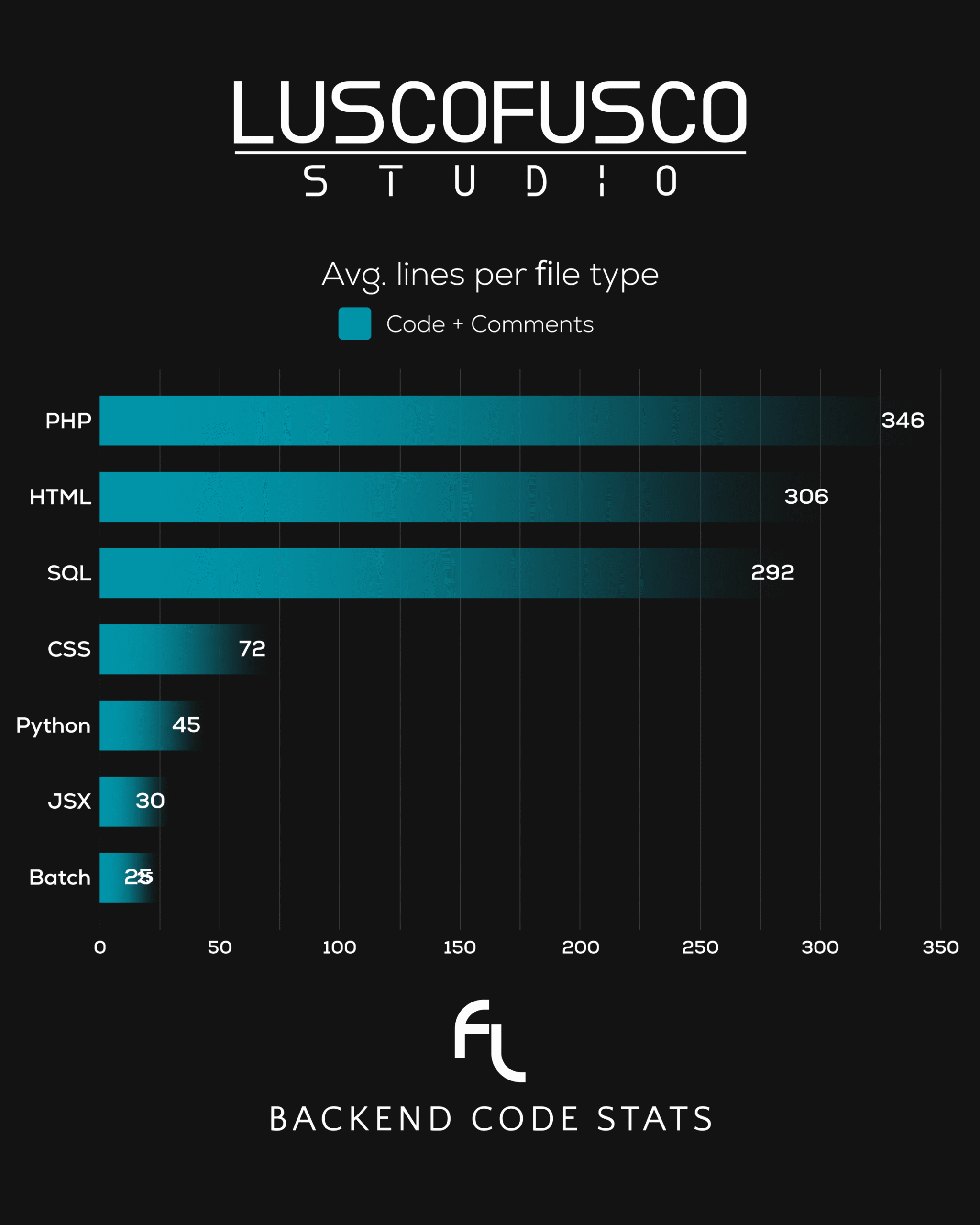
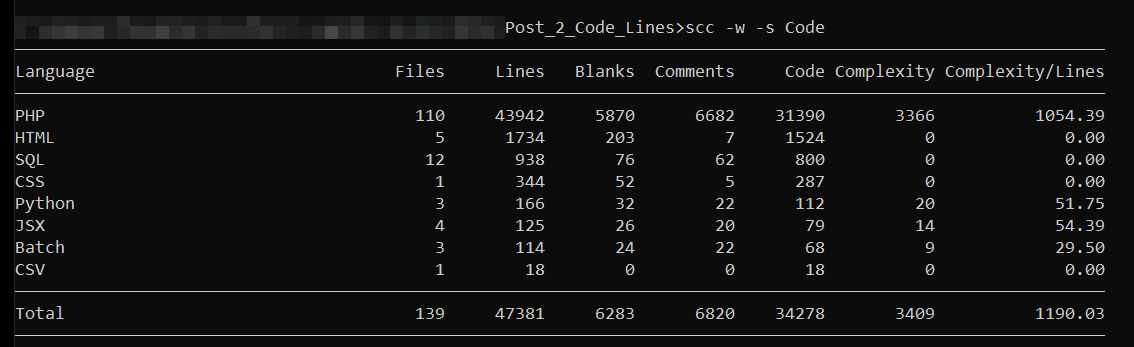
It’s worth mentioning that the count includes absolutely all backend files:
- auxiliary scripts,
- .sql files that are more efficient to keep separated,
- everything related to the administration panels,
- and all the scripts that handle the game’s internal server processes.
The match engine deserves a special mention. It’s… peculiar. One day I’ll try to explain what happens “under the hood.”
The conclusions are pretty clear: PHP dominates the entire backend, as expected.
HTML is mainly used for the internal admin pages and for generating some content for social media.
And as a final curiosity: there’s only one CSS file, in charge of giving the admin panels a minimally modern look. In the first version they looked straight out of the mid-90s.
If you’d like to share your thoughts or suggestions, you can reach me through the contact page.
And if you don’t want to miss any updates on the development, you can follow the project on Instagram: https://www.instagram.com/luscofusco_studio/
Thanks for reading, and see you in the next devlog!